
Short answer
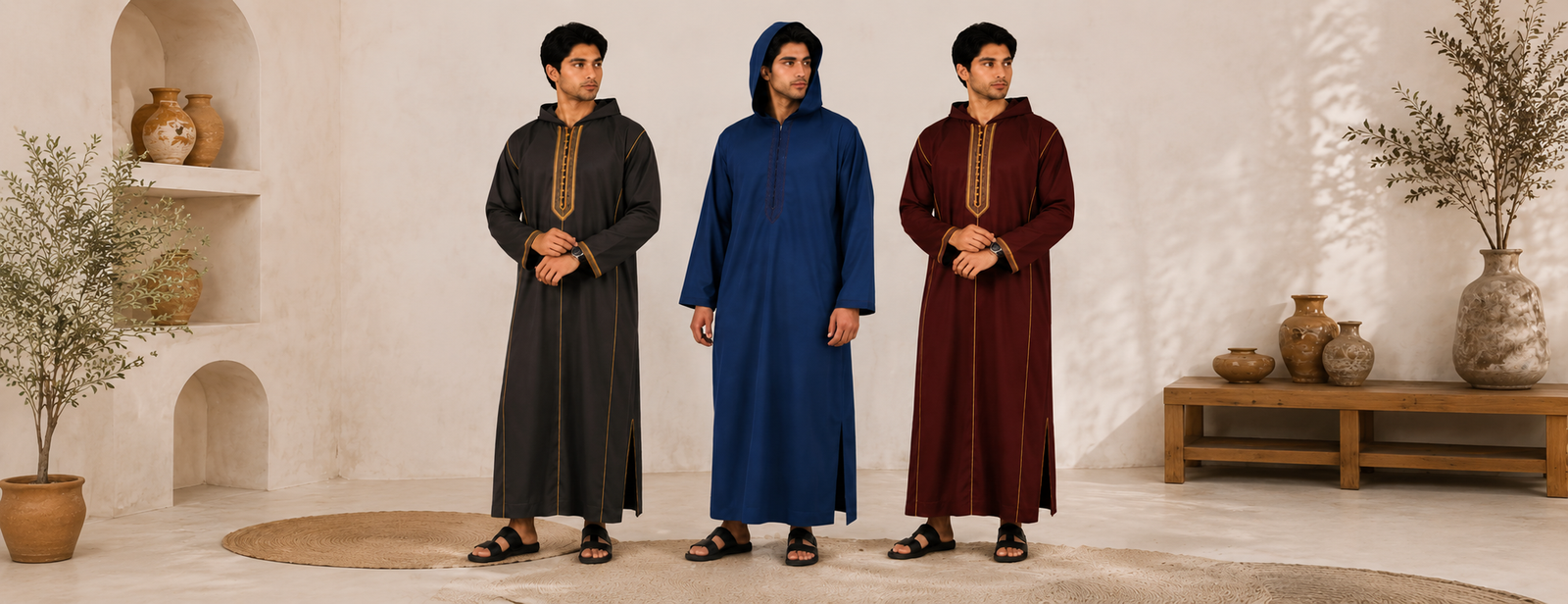
Almost everyone in Morocco, and increasingly plenty of people who have never been there. The djellaba is ordinary daily clothing rather than ceremonial dress. It is worn by Moroccan men and women of every age and every income, by Maghrebi families across France, Spain, Belgium and Britain, by Muslim men of other backgrounds, and by non-Muslims who simply like the garment. There is no rule that excludes you. Wearing one respectfully means wearing it as clothing rather than as a costume, and the difference comes down to fit and restraint far more than to background.
If you have searched this, you probably already know what a djellaba looks like. You have seen one and something about it appealed to you — the hood, the way it hangs, the fact that it looks comfortable in a way most menswear does not.
And then a second thought arrived. Is this mine to wear?
That is the real question behind “who wears a djellaba”, and it deserves a straight answer rather than a history lesson. So this guide gives you both: who actually wears one, and whether that list includes you.
Who wears a djellaba?
The honest answer is that the list is much wider than most people assume.
| Who | When and why |
|---|---|
| Moroccan men, daily | Not for special occasions. For going to the shop, to work, to the masjid. It is a workhorse garment. |
| Moroccan women, daily | The same garment with more colour and ornament. The djellaba has never been men-only. |
| Older and younger generations alike | Grandfathers in plain wool, students in modern cuts. It has not been left behind by young people. |
| The Maghrebi diaspora | Moroccan, Algerian and Tunisian families in France, Spain, Belgium, the Netherlands and Britain. |
| Muslim men of other backgrounds | British Pakistani, Bangladeshi, Somali, Arab and convert Muslims who have adopted it alongside the thobe. |
| Non-Muslims | Travellers, people with Moroccan friends or family, and people who simply find it the most comfortable thing they own. |
| Children | Cut in the same shape, worn for Eid and family occasions. |
Notice what is missing from that list: any restriction. There is no clerical class attached to it, no initiation, no rank it signals. It is a robe with a hood that people wear because it works.
Can you wear a djellaba if you are not Moroccan?
Yes, and this is not a grudging yes. Moroccans are generally pleased when visitors and outsiders wear one. It reads as interest in the culture rather than as theft from it, and people will often help you pick a better one or adjust how it sits.
The distinction that actually matters is not who you are. It is whether you are wearing it as clothing or as a spectacle. A plain djellaba worn because you find it comfortable is clothing. The same garment worn once, over-styled, for a photograph, is a costume. That difference is visible to everyone, including you.
Can you wear a djellaba if you are not Muslim?
Yes. The djellaba predates Islam in North Africa. It was absorbed into Muslim dress because it already matched what modest clothing asks for — loose, covering, dignified — but it was never a religious vestment and it is not one now.
Christians wear them. Non-religious people wear them. It carries roughly the same weight as any regional garment that people outside the region have adopted. We cover the parallel question for Gulf dress in our guide on whether non-Muslims can wear thobes.
One thing to be aware of: white is associated with Friday prayers and religious occasions in a way other colours are not. Nothing stops anyone wearing white, but if you would rather your first djellaba make no statement at all, start with navy, grey or green.
Will I look like I am wearing a costume?
This is the fear, so let us deal with it properly. Three things separate clothing from costume, and none of them is your background.
- Fit. This is the big one. Costume looks like costume mostly because it does not fit. Sleeves swallowing the hands, a hem pooling on the floor, a shoulder seam sitting halfway down the arm. A djellaba that fits reads as a coat. A djellaba two sizes too big reads as fancy dress. Nothing else you get right will rescue a bad fit.
- Restraint. Heavy gold work on an ordinary Tuesday announces itself. Plain navy, charcoal, olive or off-white does not. Men’s djellabas are traditionally sober anyway — they lean on the quality of the cloth and the neatness of the braid rather than on embroidery. Start plain and keep the ornamented one for Eid.
- Repetition. The one people miss. Nothing you wear often looks like a costume. A garment worn once a year for an occasion always will, no matter how good it is. The single most effective thing you can do is wear it regularly enough that it becomes simply what you own.
That third point is worth sitting with, because it quietly answers the whole question. The men who look natural in a djellaba are not the ones who researched it hardest. They are the ones who have three, wear them in rotation, and stopped thinking about it after the second week.
Bundle & save
Any 3 for £85
£38 each on their own. Three lets you actually wear them in rotation, which is the thing that stops any garment looking like a costume.
Where can you actually wear one in Britain?
More places than you think, and the hood is the reason. In Morocco the qob was cut against sun and blowing sand. In Britain it earns its place against rain and wind, which we have considerably more of.
- To the masjid. Jummah, taraweeh, daily salah. The loose cut suits sitting through a khutbah and moving through prayer.
- Walking anywhere in winter. This is where it beats a thobe outright. The hood is attached, so there is no coat to put over the top and flatten the whole line of the garment.
- At home. The most common answer of all. It is the most comfortable thing most people own.
- Eid and family gatherings. The same silhouette in better cloth with braid at the front.
- Around the neighbourhood. In Bradford, Birmingham, East London, Manchester and Leicester this is unremarkable. Somewhere with fewer Muslim residents you may be the only one, which is a different question and worth being honest about.
On that last point: being the only one is a real feeling and it fades quickly. It fades fastest if the garment fits and is plain, which brings us back to the same two things.
Djellaba or thobe: which suits you better?
If you already wear a thobe, a djellaba is not a replacement. It is the other half of the wardrobe.
| If you want… | Choose |
|---|---|
| Something for Jummah and formal wear | A thobe — straighter cut, collar, more tailored |
| Something for winter and walking | A hooded djellaba — the hood is attached, the cut leaves room to layer |
| Maximum comfort at home | A djellaba — wider through the body and sleeves |
| The most versatile single purchase | A plain djellaba in navy, grey or olive |
Our guide on Moroccan versus Emirati thobes and the overview of different types of jubbas go deeper if you want to compare cuts properly. And if you have never worn either, our piece on whether thobes are comfortable answers the question most people are too polite to ask.
What do you wear underneath?
Normal clothes. A t-shirt and trousers in summer, a jumper and trousers in winter. There is nothing specialised about it, and the wide cut of a djellaba means a layer underneath does not pull anywhere.
In practice most men wear a plain undershirt and a pair of loose trousers. Our guide on what men wear under their thobes applies here too. If you want to bridge into everyday British dress more gradually, some men start by wearing a thobe with jeans before moving to a full djellaba.
Which djellaba should your first one be?
If you are buying one to find out whether it suits you, buy the boring one. That sounds like odd advice from a shop, and it is still the right advice.
- Plain colour. Navy, charcoal, grey, olive or off-white. Save the gold work until you already know you like wearing one.
- Correct length. The hem should sit an inch or two above your ankle bone and never drag. Length depends on your height, not your chest size.
- Correct shoulder. The seam sits at the edge of your shoulder bone. If it slides down the arm, size down or have it cut to measure.
- Check the hood. It should lie flat when down and actually cover your head when up. Undersized hoods are the standard shortcut on cheap djellabas.
Our Moroccan size chart and measurement guide cover the numbers, and what colour to wear helps if you are stuck between shades.
Where our djellabas come from
Everything we sell is cut to order in our own workshop rather than bought in finished. That matters for a first purchase in two ways.
It means the size you need gets made rather than found, from S through to 8XL, so the fit problem that makes a djellaba look like a costume does not arise. And it means the price is £38 rather than what it becomes after an importer and a retailer have both taken a margin.
Any three thobes or djellabas together are £85 instead of £114. Nothing has to match, so a plain djellaba for winter, a white thobe for Jummah and something with gold work for Eid all sit in the same bundle. If you want something we do not stock, ask about custom-made.
- Elegant Light Grey Djellaba — the easiest first one to wear
- Stylish Navy Blue Djellaba — plain, forgiving in wet weather
- Deep Emerald Green Hooded Djellaba — colour without ornament
- Premium White Djellaba — for Jummah and Eid
- Black & Gold Djellaba — when you are ready for the ornamented one
See the full hooded Moroccan djellaba collection, or the wider Moroccan thobes and hooded thobes ranges. Plus sizes run to 8XL and are cut from dedicated plus size patterns rather than scaled up, so the hood and shoulder stay in proportion.
Delivery across the UK
| Option | Cost | Arrives in |
|---|---|---|
| Free UK delivery | Free | 6–7 working days |
| Urgent delivery | £20 | 3 working days |
Free delivery has no minimum spend and covers the whole United Kingdom. Each garment is cut after you order, so allow a little time before any date you need it for.
Frequently asked questions
Who wears a djellaba?
Moroccan men and women of all ages wear djellabas as everyday clothing, along with Maghrebi communities across Europe, Muslim men of other backgrounds, and non-Muslims who like the garment. It is ordinary daily dress rather than ceremonial or religious clothing.
Can non-Moroccans wear a djellaba?
Yes. Moroccans generally welcome it and read it as interest in the culture rather than appropriation. What matters is wearing it as clothing rather than as a costume, which is mostly a question of fit and restraint.
Can non-Muslims wear a djellaba?
Yes. The djellaba predates Islam in North Africa and was never a religious vestment. Christians, non-religious people and travellers all wear them.
Do women wear djellabas?
Yes. The djellaba has always been worn by both men and women. Women’s versions use more colour, pattern and embroidery, while men’s are traditionally more sober.
Is a djellaba only for special occasions?
No. In Morocco it is genuine daily wear, seen in markets and on streets every day. The degree of ornament is what moves a djellaba from everyday toward formal, not the garment itself.
Will I look like I am wearing a costume?
Not if it fits and it is plain. Poor fit is the main reason traditional dress reads as costume, followed by heavy ornament worn on an ordinary day. Wearing it regularly rather than once for an occasion also makes a large difference.
What do you wear under a djellaba?
Ordinary clothes. A t-shirt and trousers in summer, a jumper in winter. The loose cut means a layer underneath does not pull anywhere.
What colour djellaba should I buy first?
A plain one — navy, charcoal, grey or olive. White is associated with Friday prayers and religious occasions, and heavily ornamented djellabas suit Eid and celebrations rather than everyday wear.
How much does a djellaba cost in the UK?
At Men Thobes UK every hooded Moroccan djellaba is £38 in sizes S to 8XL, and any three thobes or djellabas together are £85 instead of £114.
Still not sure?
Message us before you buy
Tell us your height and build and what you would wear it for. We will tell you which colour and size to start with, and we will say so if we think a thobe suits you better.
Read next
- What is a Moroccan djellaba? — the qob, the craft terms, and how it is made
- Hooded Moroccan djellabas — the full collection
- Can non-Muslims wear thobes?
- Why do Muslim men wear thobes?
- Are thobes comfortable?
- Islamic garments for men — a full guide
- Different types of jubbas
- Eid clothing for men in the UK